Palekastro Palekastro
 |
|
The area of Palekastro is located 90 km from Agios Nikolaos. Specifically, at the site of Rousolakkos, archaeological excavations have uncovered the ruins of the largest city after Knossos. The archaeological site covers an area of 300 acres. Based on current research, historians believe these ruins may belong to the ancient city of Drámos, although this has not yet been definitively proven.
The site was first discovered in 1906 by the British archaeologist R. C. Bosanquet. Excavations resumed in 1986 by the British School at Athens and continue to this day.
The peak period of this Minoan city dates to the Late Minoan period (1550-1220 BC). However, remains from the Early and Middle Minoan periods (3000-1550 BC) have also been found, including cemeteries and residential structures.
The ruins reveal a densely populated settlement, crossed by a central road with many larger and smaller perpendicular paved streets that divided the city into nine districts. The city’s impressive drainage system extended to all neighborhoods, and houses were built along the main street. The rich findings indicate the city’s economic prosperity. Notable monuments include the remains of houses, a purification tank, an olive press, a well, and more.
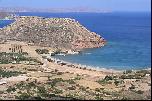
Today, the village of Palekastro has developed into a tourist destination. Local hotels are ideal for a peaceful stay. Visitors can enjoy swimming at Chiona Beach, while the small, secluded coves of the area will captivate them with their natural beauty.
|
|



 Greek
Greek  English






 Map
Map