
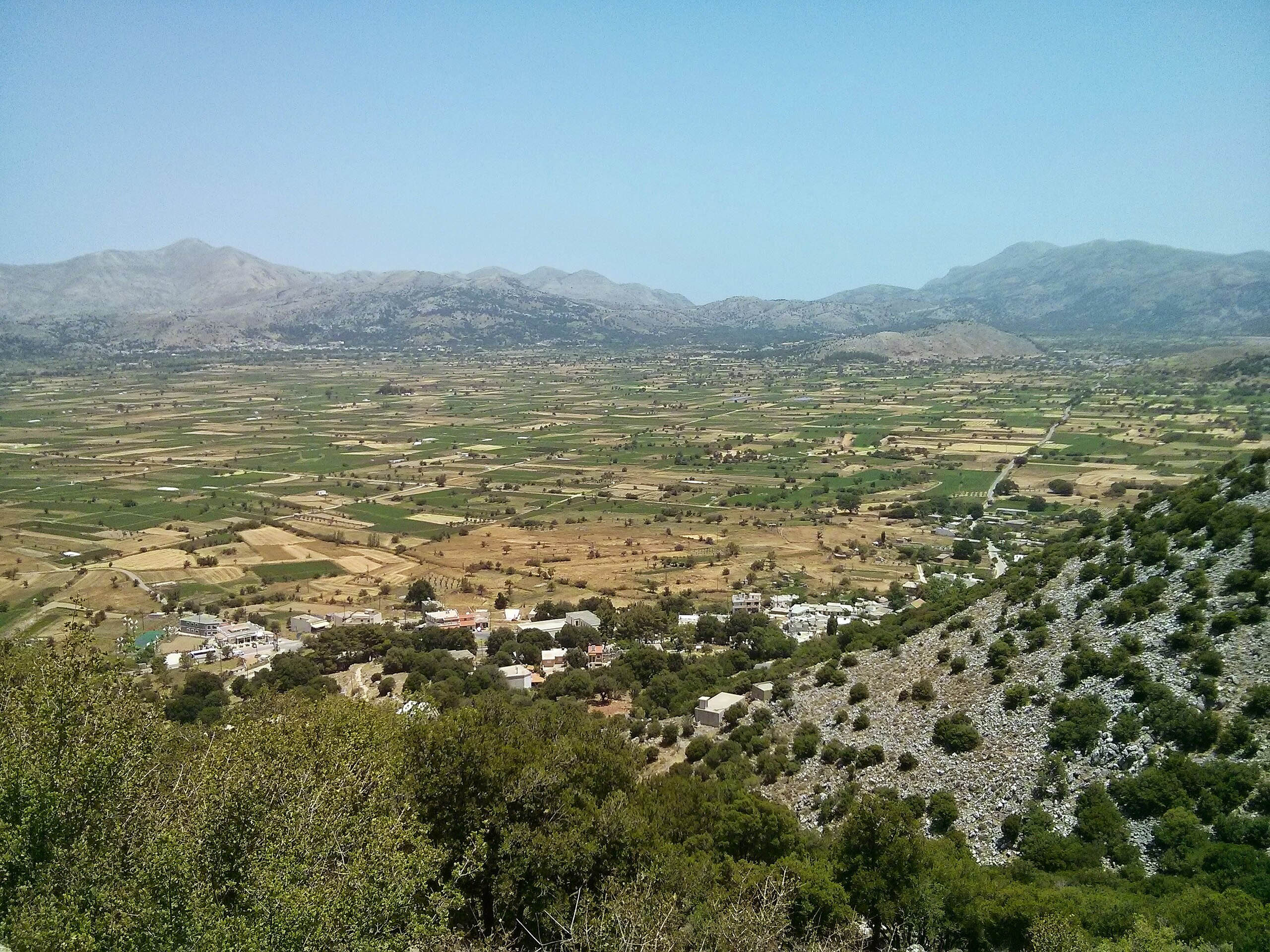
Lasithi Plateau
About Lasithi Plateau
The Lasithi Plateau sits at an altitude of 850 meters and covers an area of 25,000 acres. It is a fertile plateau, renowned for its production of vegetables and fruits.
The road that circles the plateau stretches for approximately 23 kilometers, passing through the 21 villages built on it. The peaks of Mount Dikti surround the plateau, creating landscapes of unparalleled beauty.
The villages have retained their traditional character, both in architecture and in the lifestyle of their inhabitants, helped by the fact that the area remains largely untouched by mass tourism.
Although the plateau is a magnet for its natural beauty, archaeological sites, and rich history, it has yet to be fully developed as a tourist destination. Visitors seeking peaceful holidays close to nature will find accommodation in traditional guesthouses scattered across the villages.
The capital of the plateau and the seat of the eponymous municipality is the picturesque village of Tzermiado. This charming village offers breathtaking views, and from Tzermiado, following a passable dirt road, you can reach the site of Karfi at an altitude of 1,100 meters, where the ruins of the Minoan settlement of the Eteocretans can be explored.
From the village of Psychro, visitors can access the famous Dikteon Cave, located at 1,025 meters above sea level. According to Greek mythology, it is here that Rhea gave birth to Zeus to protect him from his father Cronus, who swallowed his male children to prevent them from overthrowing him. Zeus was then entrusted to the Curetes, who transported him to the Idaean Cave on the Nida Plateau in Rethymno, where he spent his early years. For this reason, Zeus is called "Cretagenes." Excavations inside the cave have revealed artifacts indicating that the Dikteon Cave served as a sanctuary dedicated to Zeus up to the Roman era.
A journey through the Lasithi Plateau fills visitors with unforgettable sights and a deep sense of Crete's rich cultural and natural heritage.


Reviews
No reviews yet. Be the first to share your experience!