
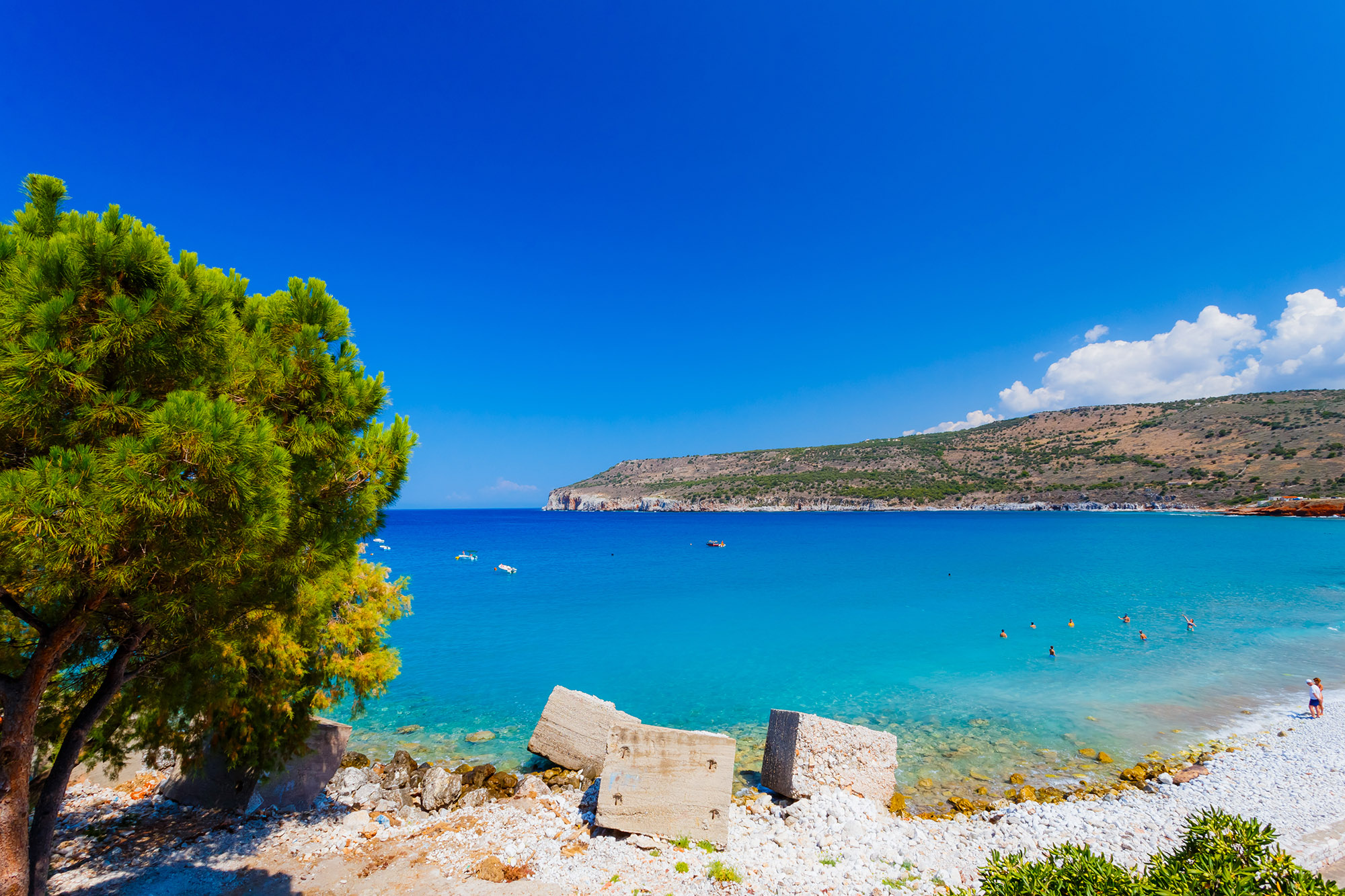
Diros
About Diros
The Dirou area is world-famous for its spectacular caves. It is located 83 km from Sparta and serves as the gateway to Mani.
The traditional village of Pyrgos Dirou impresses visitors as it is built on the rock that houses the famous cave. The stone towers of the village captivate travelers, but the greatest admiration is reserved for the namesake Cave, considered one of the most beautiful and impressive lake caves in the world.
The Dirou Cave
The Dirou Cave is divided into three separate caves: the Vlychada or Glyfada cave, which is open to visitors, and the Alepotrypa and Katafygi caves, which are still under exploration and not yet accessible.
Visiting the Vlychada or Glyfada cave is a unique experience. The scenes you will witness are extraordinary and showcase the magnificence of nature. Pure white stalactites and stalagmites, sculpted by nature itself, form designs of unmatched beauty. Sparkling crystals adorn hidden corners of the cave, and the magic is completed by the colorful formations created over centuries as stalactites and stalagmites intertwined.
Beyond the visual spectacle, the cave's history is remarkable. Its existence has been known to locals since 1900, but no one could have imagined the wealth it concealed and its significance, as it is now recognized as one of the most remarkable caves of its kind worldwide.
The guided tour of the cave is conducted partly on foot and partly by boat, lasting approximately 30 minutes. The cave extends over 14 km and began forming hundreds of thousands of years ago. Stalactites and stalagmites beneath the water formed when sea levels were much lower than today. Remarkably, stalactites have been found at a depth of 71 meters.
The water inside the cave is brackish with high hardness. Its temperature is 14°C, while the air temperature ranges between 17-19°C year-round. The crystal formations and limestone structures create a breathtaking scene. Locals have named many of these formations after figures from ancient mythology, such as the Herakles Columns and the Foot of Poseidon. The vast cave is also divided into sections based on the dominant color of the crystals, including the "Red Hall," "White Hall," and "Ocean Hall."
The Alepotrypa Cave
While the Vlychada or Glyfada cave attracts visitors with its striking geological formations, the Alepotrypa Cave revealed a unique treasure for archaeologists. Its rich findings have provided important insights into Neolithic life.
Specifically, Alepotrypa, according to research, was inhabited during the Early and Late Neolithic periods (5400-3200 BC) and served as a residence, storage space, craft workshop, burial site, and place of worship. Evidence for this comes from weapons, tools, pottery, and human skeletal remains found within the cave.
Researchers believe a strong earthquake at the end of the 4th millennium caused extensive rock falls from the ceiling and side walls, sealing the cave entrance and trapping its inhabitants inside. This explains why many skeletons discovered were not formally buried.
No photos yet. Be the first to share your experience!
No photos yet. Be the first to share your experience!
Reviews
No reviews yet. Be the first to share your experience!