Padova unfolds across the plains of the Veneto as a city where intellectual heritage and everyday life intersect in a steady, unhurried rhythm. Often overshadowed by nearby Venice, Padova reveals a more grounded and lived-in version of northern Italy, shaped by centuries of scholarship, art, and civic tradition.
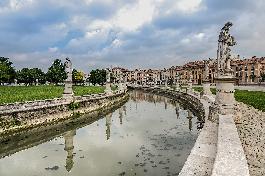
At its core stands the historic University of Padua, one of the oldest universities in Europe, which has long infused the city with a vibrant, youthful energy. Students and locals share the same arcaded streets and expansive squares, giving Padova a sense of continuity between past and present. The city’s layout is defined by wide piazzas, including the vast Prato della Valle, an elliptical space encircled by statues and a canal, where the scale alone creates a feeling of openness unusual for a historic center.
Art and spirituality are deeply embedded in Padova’s identity. The Scrovegni Chapel houses a cycle of frescoes by Giotto that transformed Western art with their emotional depth and realism. Nearby, the Basilica of Saint Anthony of Padua draws pilgrims and visitors alike, its domes and intricate interior reflecting layers of architectural influence and devotion.
Despite its cultural weight, Padova feels approachable. Markets fill the squares with color and activity, cafés extend under long arcades, and bicycles weave through the streets, reinforcing the city’s human scale. The surrounding landscape is flat and fertile, but just beyond lie the gentle rises of the Euganean Hills, offering a natural contrast to the urban fabric.
Padova’s character is not built on spectacle but on depth. It rewards attention rather than haste, revealing its significance through details—faded frescoes, scholarly traditions, and the quiet persistence of daily life woven into a city that has been thinking, creating, and evolving for centuries. |
| Add Review [Reviews Guidelines] |
| Only registered Holiday members may write reviews. Register. |



 Greek
Greek  English





 Map
Map