PIEDMONT PIEDMONT
 |
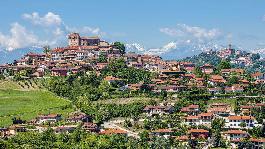
Piedmont lies at the foot of the Alps in northwestern Italy, where broad plains meet rising mountains and a strong sense of structure defines both landscape and culture. The name itself—“at the foot of the mountains”—captures its geography, with the Alpine arc forming a constant presence along the horizon.
The region opens with wide, fertile plains shaped by rivers and agriculture, giving way to gently rolling hills that are among the most cultivated in Italy. Vineyards dominate these slopes, especially in areas like the Langhe and Monferrato, where the land appears carefully ordered, almost geometric in its precision. The rhythm here is tied to seasons, harvests, and long-standing agricultural traditions.
At its center stands Turin, a city of elegant boulevards, arcades, and a more restrained architectural style compared to other Italian cities. Its past as a royal capital is visible in its symmetry and formality, giving it a composed, almost introspective atmosphere.
Beyond the plains and hills, the Alps rise quickly, introducing a more dramatic and vertical dimension. Valleys cut into the mountains, and small towns sit along their edges, where life adapts to altitude and climate. In winter, these areas become gateways to alpine landscapes; in warmer months, they offer quiet, expansive views and a sense of retreat.
Piedmont’s identity is defined by depth and refinement. It is less immediately expressive than some regions, but more layered—its culture, cuisine, and landscape revealing themselves gradually. The overall impression is one of balance and discipline, where natural forms and human activity coexist with a quiet, deliberate harmony. |
|



 Greek
Greek  English