AOSTA VALLEY AOSTA VALLEY
 |
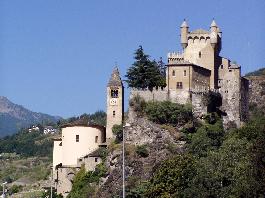
Aosta Valley is Italy at its most alpine—compact, dramatic, and shaped almost entirely by the presence of mountains. Tucked into the far northwest corner of Italy, it is surrounded by some of the highest peaks in Europe, including Mont Blanc and Matterhorn, whose snow-covered forms define the skyline in every direction.
The region feels enclosed yet expansive at the same time. A central valley runs through it, carved by glaciers and rivers, while smaller valleys branch off into increasingly remote and elevated terrain. Villages are often built from stone and wood, designed to withstand harsh winters, and they sit in close relationship with the landscape rather than apart from it.
v
The town of Aosta serves as the cultural heart, where Roman ruins—arches, gates, and an ancient theater—stand alongside alpine architecture. This layering of history adds depth to a place that might otherwise seem defined only by nature.
v
Life here follows the rhythm of the seasons. Winters are crisp and intense, drawing skiers and mountaineers to world-renowned slopes and high-altitude resorts. Summers, in contrast, open the region to hiking trails, green pastures, and clear mountain air, where the silence feels almost complete except for the sound of water and wind.
Aosta Valley also carries a distinct cultural identity, influenced by both Italian and French traditions. This is reflected in language, cuisine, and everyday life—rich dishes like polenta, cheese, and cured meats suited to the alpine climate, often enjoyed in warm, rustic settings.
What defines the region is its purity of environment. The scale of the mountains, the clarity of the air, and the relative isolation create a sense of focus and stillness. It is a place where nature dominates, and human presence adapts, resulting in an experience that feels both powerful and quietly grounding. |
|



 Greek
Greek  English