Larisa town Larisa town
 |
|
Larissa is the capital of both the Larissa region and province, and the seat of the Municipality of Larissa. It serves as a commercial, industrial, administrative, transportation, and agricultural center for the entire Thessaly region.
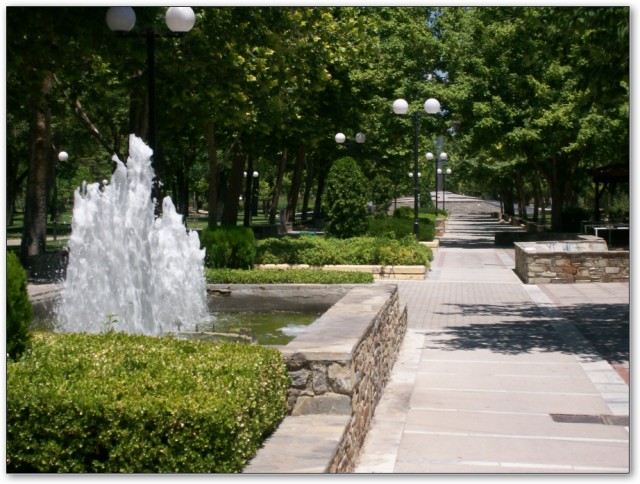
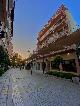
The city is built in the central-eastern part of the Thessalian plain, on both banks of the Pineios River. Larissa is characterized by its large squares, pedestrian streets, parks with lush gardens, and modern buildings.
Larissa is a vibrant city with a significant cultural scene. Throughout the year, it hosts major events that often have international recognition. The most notable include the Choral Festival of the Larissa Music Association, the Hippocratia Festival, the Achilleia Festival honoring Saint Achilleios with various events, and the Mediterranean Festival of Young Filmmakers. The Municipal and Regional Theatre of Larissa, known as the Thessalian Theatre, plays an important role in the city’s cultural life, offering high-quality performances.
Additionally, the city occasionally hosts scientific conferences, symposiums, lectures, meetings, and book presentations.
During your stay in Larissa, it is worth visiting the famous Alkazar Park on the left bank of the Pineios River. Here you can enjoy a beautiful artificial lake, mini-golf facilities, and the Kipotheatro, an open-air amphitheater for cultural events. Opposite the park stands the monument of Hippocrates.
Also worth visiting are the Archaeological Museum and the Folklore Museum, each housing fascinating collections and significant exhibits. A stroll to the hill of Saint Achilleios, where the remains of the ancient acropolis are located, is highly recommended.
The history of Larissa stretches back millennia. Excavations on the Frouros Hill show that the area has been continuously inhabited since 6000 BC. The city preserves numerous historical monuments reflecting its illustrious past, including the ruins of a 6th-century three-aisled Early Christian Basilica and the Ancient Theatre of Dionysus.
The Archaeological Museum, housed in a preserved Ottoman mosque, displays important findings from the Early Christian period through Byzantine times.
The name Larissa is of Pelasgian origin and was widely used in ancient Greece, meaning a “strongly fortified hill” or acropolis. Interestingly, the acropolis of Argos also bore the same name.
|
|



 Greek
Greek  English







 Map
Map