CANCÚN CANCÚN
 |
|
|
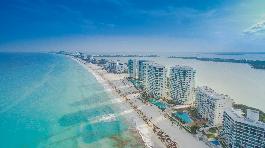
Cancún sits on the northeastern edge of Mexico’s Yucatán Peninsula, where the Caribbean Sea meets a narrow strip of land shaped into a long, curved barrier between ocean and lagoon. The city is defined by this dual geography: open sea on one side, calm inland water on the other, with development stretched along the narrow coastal zone.
The most recognizable feature is the Hotel Zone, a continuous line of resorts and beaches facing the Caribbean. Here, the shoreline is wide and bright, with fine white sand and water that shifts through shades of turquoise and deep blue depending on depth and light. The sea is often clear and warm, and the horizon feels uninterrupted, giving the area a strong sense of openness and exposure.
Behind this coastal strip lies the Nichupté Lagoon, a network of calm, shallow waters, mangroves, and inlets that contrasts with the movement of the ocean. This inland lagoon system creates a quieter, more enclosed environment, where vegetation and water blend into a softer, less defined landscape.
Beyond the resort zone, the mainland city spreads outward with a more functional and everyday character. Residential neighborhoods, markets, and local infrastructure reflect a different rhythm—less oriented toward tourism and more toward daily life, though still influenced by the city’s rapid growth and international connections.
The surrounding region connects Cancún to a broader cultural and natural context. Inland, remnants of the ancient Maya civilization, such as Chichén Itzá, anchor the area in a deep historical timeline, while the limestone terrain of the peninsula creates underground rivers and cenotes that shape the region’s ecology.
What defines Cancún is its constructed clarity: a place deliberately organized around coastal experience, where natural beauty—sand, sea, and light—is framed by planned development. It feels both immediate and curated, a landscape where the intensity of the Caribbean environment is made accessible through a highly structured setting. |
|



 Greek
Greek  English