BRUSSELS BRUSSELS
 |
|
|
Brussels is a city where medieval grandeur and modern diplomacy coexist within a compact, walkable core. As the capital of Belgium and the de facto administrative center of the European Union, it balances political importance with neighborhood intimacy, culinary excellence, and a distinctly artistic sensibility.
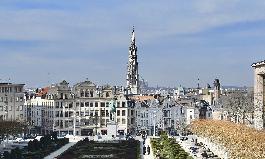
At the heart of the city lies the Grand Place, a UNESCO-listed square often regarded as one of Europe’s most beautiful. Gothic spires and opulent guildhalls line the plaza, their façades gilded and intricately detailed. A short walk away, Art Nouveau townhouses designed by Victor Horta reveal Brussels’ pioneering role in this architectural movement. The city’s layout encourages exploration: narrow cobbled streets radiate from the center, opening unexpectedly into lively squares and café-lined avenues.
Brussels is officially bilingual (French and Dutch), and its layered identity is evident in its street signs, institutions, and cuisine. Beyond politics, the city is deeply creative. It is the birthplace of the comic character Tintin and home to major art institutions, including the Magritte Museum, dedicated to the Belgian Surrealist René Magritte. Public art appears frequently and unexpectedly — from murals to quirky statues — reinforcing the city’s subtle humor and imaginative spirit.
Food is central to the Brussels experience. Local brasseries serve:
Crisp Belgian fries with a wide array of sauces
Steaming bowls of moules-frites
Light, rectangular Brussels waffles dusted with sugar
An extensive range of Belgian beers, including Trappist and abbey varieties
Chocolate boutiques are abundant, with artisanal pralines displayed like fine jewelry.
Each district has a distinct rhythm. The historic center is energetic and tourism-oriented. The European Quarter feels polished and international. Saint-Gilles and Ixelles offer café culture, markets, and creative communities. Despite its political stature, Brussels rarely feels overwhelming. Distances are short, public transport is efficient, and green spaces such as Parc du Cinquantenaire provide room to pause.
Brussels does not rely on spectacle. Its appeal lies in nuance — ornate façades glimpsed down side streets, the aroma of waffles carried through cool air, conversations switching seamlessly between languages. It is a city best appreciated slowly, through observation and appetite. |
|



 Greek
Greek  English






 Map
Map