
Santorini, officially known as Thera, is one of the most iconic and visually stunning travel destinations in the world. Its breathtaking crescent shape and dramatic geological structure are the results of a series of cataclysmic volcanic eruptions-most notably the Minoan eruption around 1600 BC-which caused the center of the island to collapse into the sea, creating the largest submerged Caldera on Earth. Today, its sheer, multi-colored cliffs plunge dramatically into the deep blue of the Aegean.
The island's main villages are perched precariously along the cliff's edge, showcasing a masterclass in Cycladic architecture. Fira, the bustling capital, along with the upscale clifftop settlements of Firostefani and Imerovigli, offer unobstructed, sweeping views of the caldera and the volcanic islets of Nea and Palaia Kameni. At the northernmost tip lies Oia, globally renowned for its mesmerizing sunset views, its unique yposkafa (cave houses carved directly into the rock), and its iconic blue-domed churches. Beyond its romantic appeal, Santorini holds immense archaeological weight, home to the ancient site of Akrotiri-a sophisticated Bronze Age city buried under volcanic ash and beautifully preserved, often referred to as the "Pompeii of the Aegean."
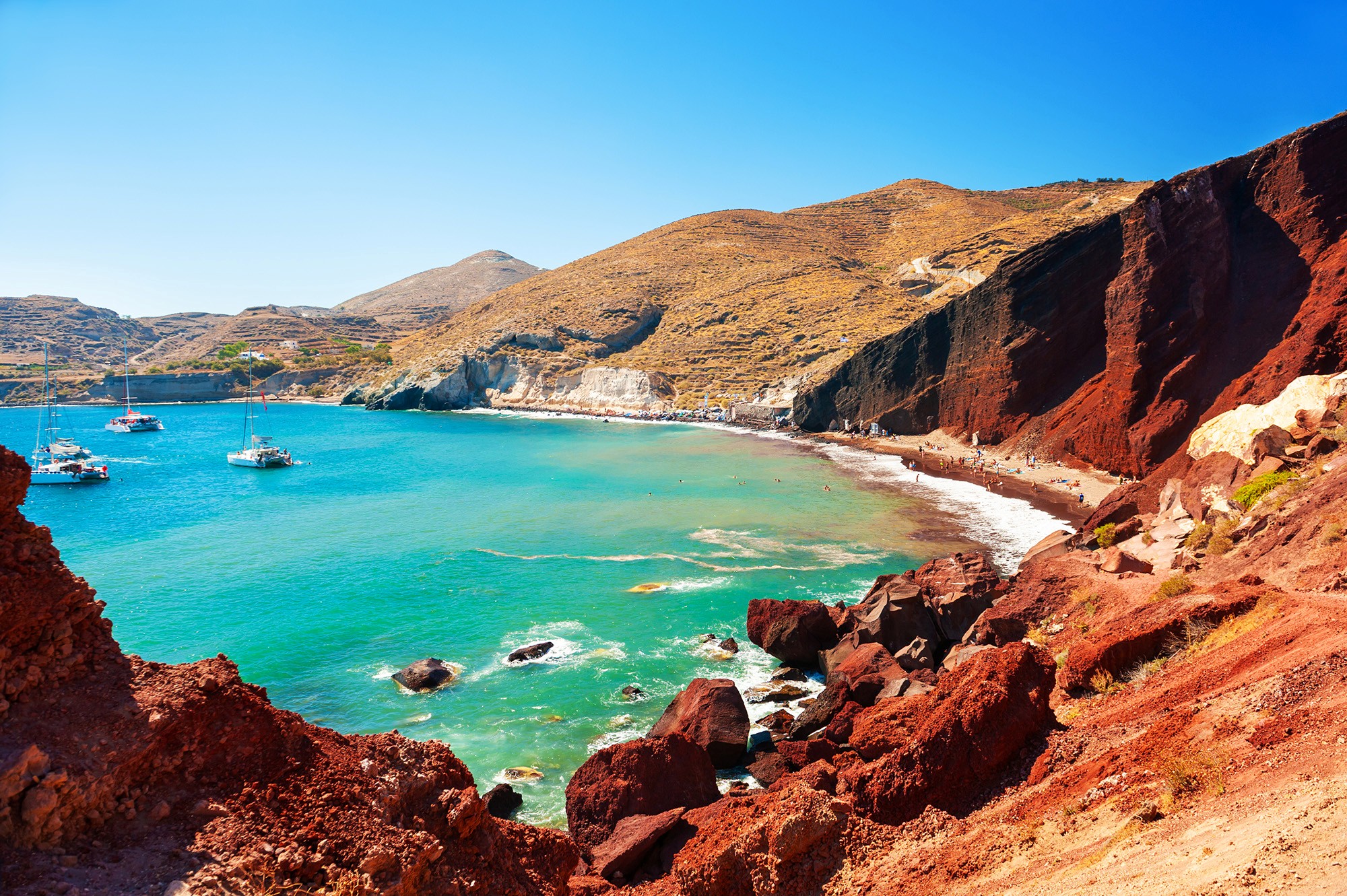
The island's volcanic DNA is fully reflected in its extraordinary coastline. The Red Beach captivates visitors with its towering, rust-colored iron cliffs, while the endless stretches of the Black Beaches in Kamari, Perivolos, and Perissa offer a starkly beautiful landscape of dark volcanic sand and deep, crystalline waters. Santorini is also internationally celebrated for its unique agricultural heritage and Europe's oldest continuously cultivated vineyards. The arid, mineral-rich volcanic soil yields exceptional local produce, including the famous Santorini fava beans, cherry tomatoes, and world-class, award-winning volcanic wines such as Assyrtiko and the sweet Vinsanto.