
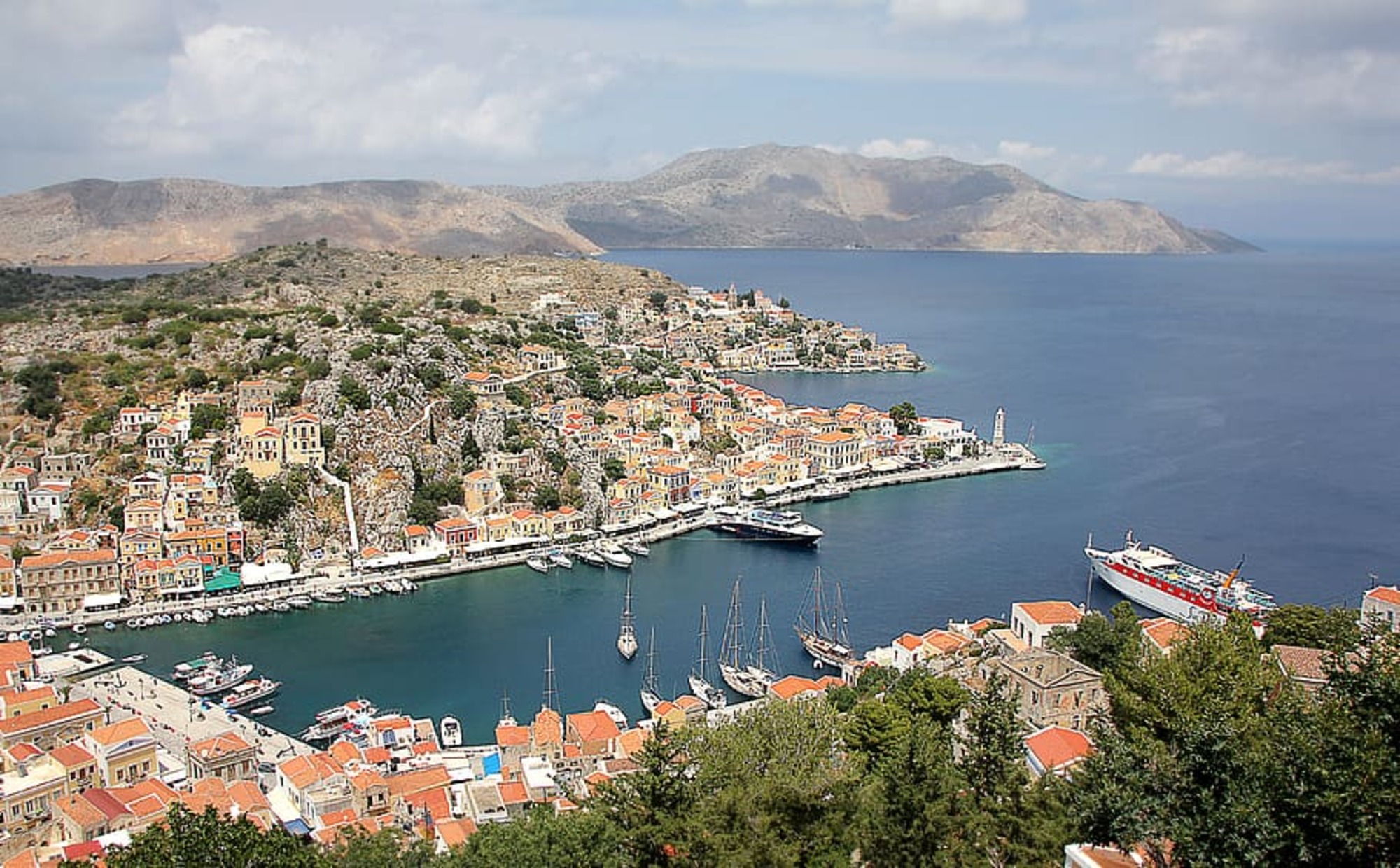
The Dodecanese is a spectacular island group nestled in the southeastern corner of Greece, comprising 15 major islands and dozens of smaller islets. Due to their strategic geographical position, these islands have historically served as a maritime bridge between Europe and the East. Over the centuries, they were shaped by successive eras of Byzantine, Knightly, Ottoman, and Italian rule before officially uniting with Greece in 1948-a rich historical tapestry that has gifted the region a uniquely diverse architectural and cultural identity.
Rhodes, the Island of the Knights and the administrative capital of the complex, captivates global travelers with its remarkably preserved Medieval Old Town-a UNESCO World Heritage site-and the dramatic ancient Acropolis of Lindos. Kos, the birthplace of Hippocrates (the father of modern medicine), seamlessly blends monumental ancient sites like the Asklepieion with endless cycling paths and expansive sandy shorelines. Further north, Patmos, the "Island of the Apocalypse," radiates a profound spiritual serene atmosphere centered around the imposing Monastery of Saint John the Theologian and the Holy Cave where the Book of Revelation was written.
Beyond the major hubs, every island in the Dodecanese boasts a distinct and compelling personality. Kalymnos is globally renowned for its legendary sponge-diving heritage and has evolved into a premier international destination for rock climbing. Symi and Kastellorizo mesmerize visitors with their incredibly picturesque, pastel-colored neoclassical harbors that resemble living watercolor paintings. Volcanic Nisyros offers the rare thrill of walking directly inside an active hydrothermal crater, while islands like Astypalea (with its distinct Cycladic-style white aesthetics), Karpathos, Kasos, Leros, and Tilos offer raw natural beauty, rich musical traditions, and untouched beaches perfect for those seeking authentic Greek island life.